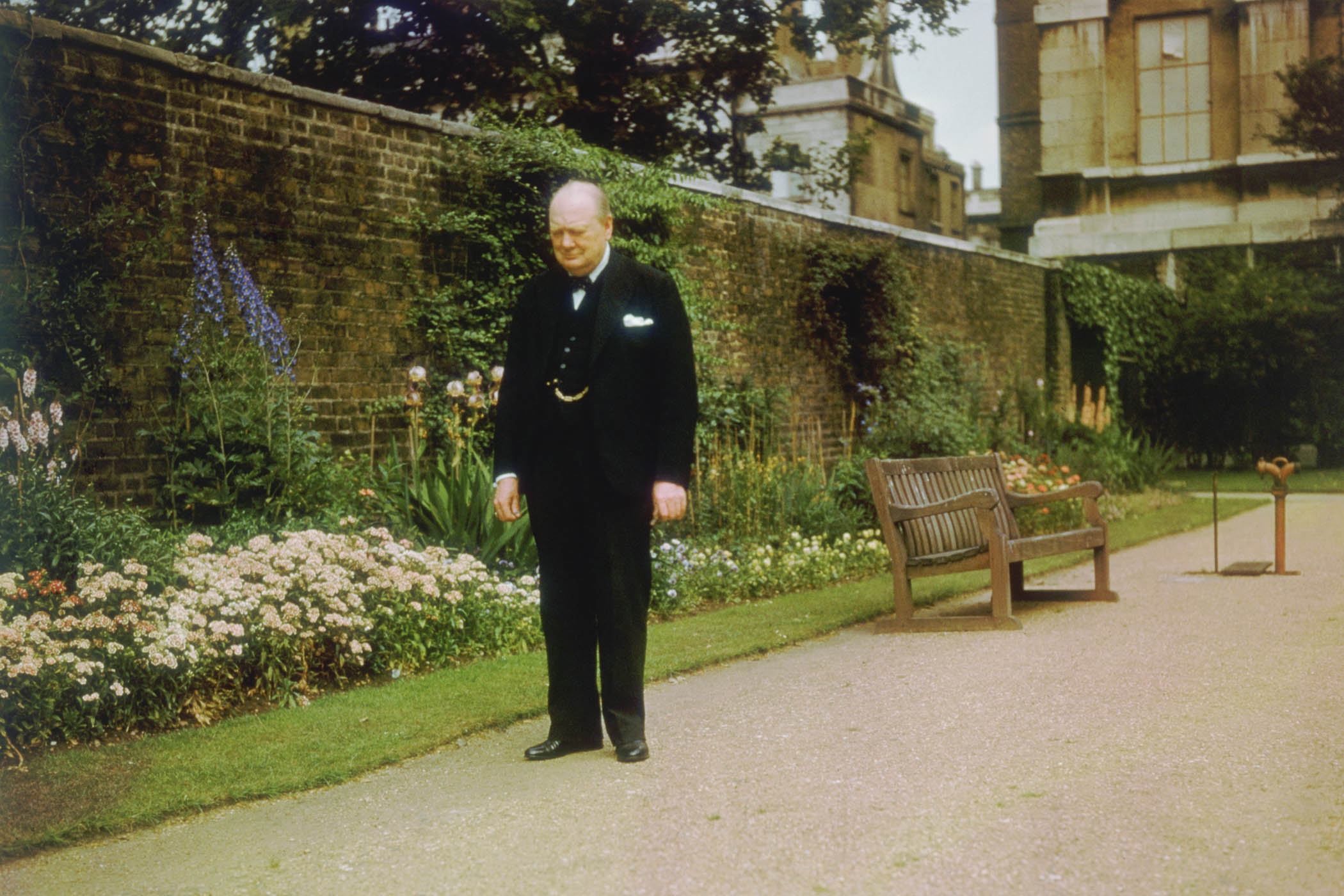

In the Oldham byelection of 1899, the 24-year-old Liberal candidate Winston Churchill said, to an almost deserted church hall: “Never before were there so many people in England, and never before have they had so much to eat.” Nine years later Churchill, now a colonial under-secretary, launched an irrigation scheme in Africa with this flourish: “Nowhere else in the world could so enormous a mass of water be held up by so little masonry.” You can see where this is going in that hint of the rhythm that would eventually, as David Cannadine put it, “mobilise the English language”.
The point is that it took Churchill a long time to become Churchill. So when President Trump says that Keir Starmer is “no Winston Churchill” because the prime minister refused to permit the use of the Diego Garcia military base for the initial American and Israeli strikes on Iran, there might be a retort. Starmer would be within his rights to say that it might be a good thing to be no Winston Churchill. And he might go on to point out that, whether or not he is like Churchill, Trump himself certainly isn’t.
The Churchill invoked by Trump is a creature of one vital moment, which is not remotely like the moment we are in now. Trump’s Churchill is the heroic leader whose intellectual clarity about the fatal danger presented by National Socialism helped save civilisation. We have a great deal to thank this Churchill for, but his world is not our world. Churchill faced the immediate peril of German planes in the London sky. Conflict, by the summer of 1940, was unavoidable and being the man who became “Churchill” was imperative.
The situation confronting the prime minister today bears no relation to this. Britain faced no present danger. Instead, Starmer was asked to contribute to an unannounced, unsanctioned attack on Iran by a president who can barely even iterate the objective of his intervention. He was asked to facilitate an attempt at regime change whose chances of success are highly uncertain and which has no viable leader in waiting on its other side. It is possible to argue that Starmer should have been more forthcoming for his allies, but this is not the Battle of Britain.
In defence of his cautious and prudential position, Starmer might also reasonably tutor Trump in the good and the bad of Winston Churchill the complete historical figure. Throughout his career Churchill’s headstrong certainty often led to poor judgments regarding complex problems. As First Lord of the Admiralty in 1915, Churchill pushed for force in the Dardanelles against the Ottoman empire. The British lost 250,000 men. Churchill was keen to get involved in the civil war after the Russian Revolution. The code name for his fledgling plan for an attack on the Soviet Union is a metaphor for this stage of Churchill’s career: Operation Unthinkable.
‘Starmer might also reasonably tutor Trump in the good and the bad of Winston Churchill the complete historical figure’
‘Starmer might also reasonably tutor Trump in the good and the bad of Winston Churchill the complete historical figure’
As secretary of state for war in 1920, Churchill rashly deployed the Black and Tans during the Irish war of independence. As colonial secretary in 1922, an impetuous Churchill helped push a confrontation with Turkish nationalist forces, which left Britain diplomatically isolated and contributed to the fall of the Lloyd George government. Most infamously of all, in 1943 Churchill’s government was culpably slow to allocate shipping for grain imports to alleviate the Bengal famine. Officials in India repeatedly requested more food, to no avail.
So perhaps Starmer’s lawyerly caution has something to commend it. The former British foreign secretary David Miliband has spoken frequently in recent years about the age of impunity in which we live. He means the absence of restraint on leaders who do not have to answer for their adventures abroad to democratic audiences at home. But if the spirit of impunity begins to infuse the leaders of the democratic nations too, then we are truly in a new age. President Trump was, and is, untroubled by the need to seek permission from Congress, he is uninterested in the demands of international law and disdainful of the residual authority of the United Nations. He acts as the supreme leader he thinks himself to be.
This means he is no Winston Churchill. Trump probably has no interest in reading the 1941 Atlantic Charter that Churchill negotiated with Franklin D Roosevelt in Newfoundland. The charter was a statement of principles to govern the post-war world. Churchill was hoping to bind America closer to Britain and he would not hear of its principles being applied to, for example, India. The Atlantic Charter was a landmark all the same and in 1942 it was formally endorsed by those countries that signed the Declaration by United Nations, the first formal step in the process that created the UN in 1945.
For all his special imperial pleading and belief that the international order had to be led by the English speakers in the world, Churchill endorsed the principle that major powers would enforce international law collectively. He approved, against his initial scepticism, the legal approach that led to the Nuremberg trials, which created the legal concept of the crime against humanity and the principle that state leaders can be held personally accountable under international law.
This is a world to which Starmer is appealing, perhaps forlornly. It may be that the world of Churchill is a relic. The prime minister sounds rather naive asking for a negotiated settlement as the president calls a press conference to discuss the “guaranteed death” the Iranians will face if they do not surrender. Talk of rights and order sound hollow when Azerbaijan has just become the 11th country to be drawn into the war and Tehran’s foreign minister, Abbas Araghchi, is telling news agencies that Iran expects and is ready for a ground invasion. But none of that makes Starmer’s position stupid and none of it makes his position ignoble. And, to the extent that he both is and is not like Winston Churchill, he might just be getting the balance right.
Newsletters
Choose the newsletters you want to receive
View more
For information about how The Observer protects your data, read our Privacy Policy
Photograph by Hulton Archive/Getty Images