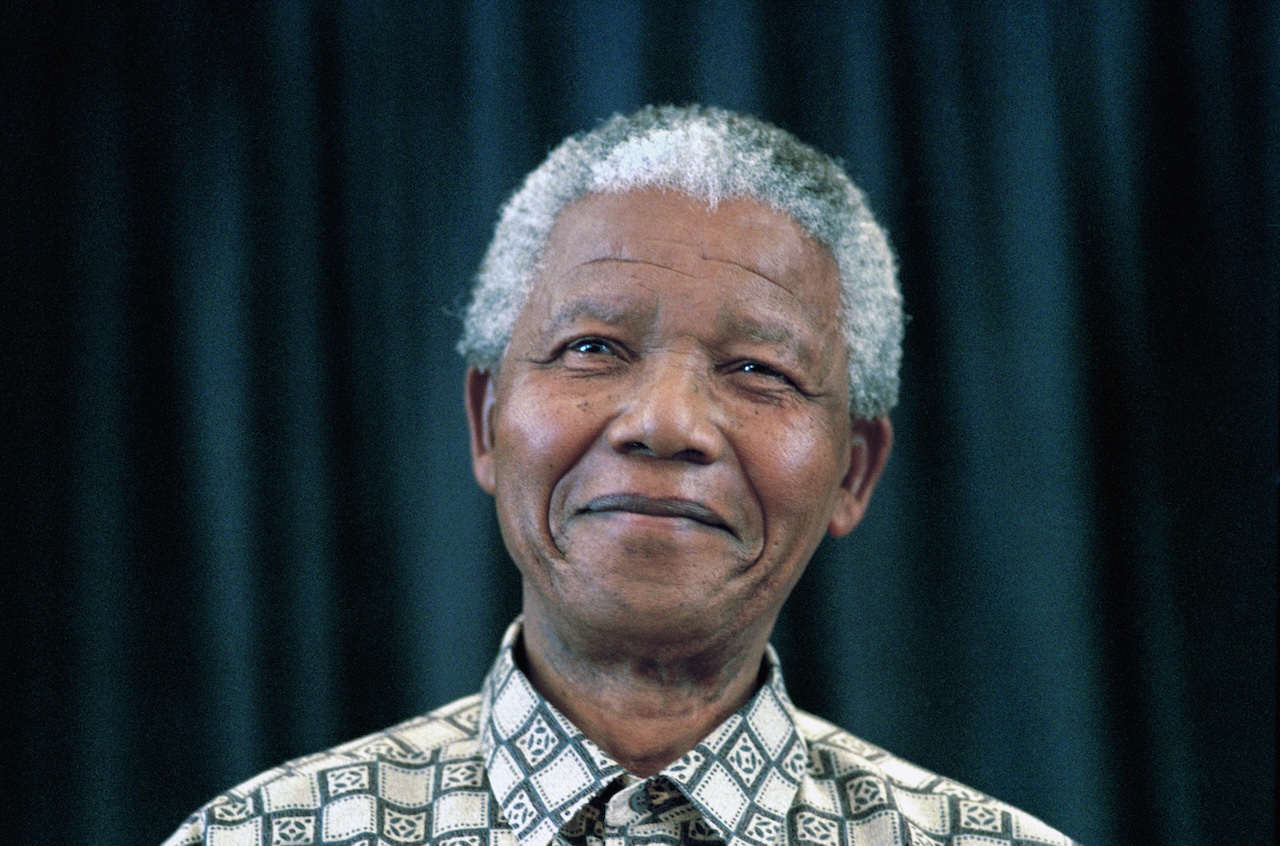

When Nelson Mandela was jailed for life in 1964, Prime Minister Hendrik Verwoerd provided one of those famous quotes the new South Africa abounds with: “If Nelson Mandela, like Jomo Kenyatta, goes to prison, comes back and rules South Africa, then I say God forbid.”
Last Tuesday, facing a sea of journalists covering the country’s first democratic elections and on the verge of ruling South Africa, Mandela was offered an opportunity of rebuttal. Now is not the time to carp on the past, he said, straight-faced, not deigning to dignify the dustbin of history with a final gloating peek.
Mandela’s victory could hardly be more complete. Next Friday, in all probability, the first sitting of the first parliament of the new South Africa will be elect him President. One of Verwoerd's successors as National Party leader, F W de Klerk, will be a junior partner in Mandela's government.
But if Mandela has emerged triumphant against apartheid, his stony reply to the question about Verwoerd spoke of an-other struggle, to rein in the inner man to the needs of the political struggle. Since his release from prison on 4 February 1990, he has been asked countless times whether he feels bitterness for being incarcerated for more than 27 years, forced to break stone on Robben Island while his wife, Winnie, was mercilessly harassed, he was denied the right to be a father ro his children.
He always evades the question, preferring to talk about the task at hand: to reach an accord and unify the country. But at times there is a sideways glance of surprising harshness, even pain, in his face.
ANC negotiator Mac Maharaj, who was on Robben Island with Mandela, remembers how the ANC president systematically worked to tame his youthful temper. Maharaji noted Mandela’s ability to keep his feelings hidden from his closest friends.
Last year, Mandela said how impressed he was by the Chinese) how he had read . of Mao’s and what it taught him about the Chinese philosophy of self-cultivation. It was not only this that had taught him to put aside all bitterness. “In prison you learn the value of self-discipline. You stand outside yourself and seE your weaknesses.“
Nelson Rolihlala Mandela was born in a village on the banks of the Mbashe River in Transkei on 18 July 1918. He is a man of his continent, of his time, of the system of apartheid that made of him a freedom fighter. His cousin, Kaiser Matanzima, was the first leader of the Transkei homeland.
Mandela the politician can be stiff, but he is never plastic. He is more of a man of the first generation of post-colonial nationalists – Kwame Nkrumah, Julius Nyerere and Patrice Lumumba – than one expected. Like them, he embodies the nation. For millions of ordinary people he stands for dignity and rights and a better future. At campaign rallies these past months, Mandela has lit a flame of excitement.
But it is not the images of an isolated politician on a stage that lingers. It is that lean figure, with the gently creased features, crouching attentively before a shy five-year-old; shaking hands, hale and hearty, with whites caught unaware in their bathing trunks at a beachfront hotel; tramping around a muddy field; reaching out and touching the crowds, who explode in thunderous joy, homemade banners in the air, hands raised, faces rapt.
Newsletters
Choose the newsletters you want to receive
View more
For information about how The Observer protects your data, read our Privacy Policy
In the furthest grass hut village in the Gazankulu homeland raise their thumbs and say “Mandela” with wonder in their eyes.